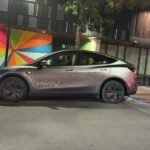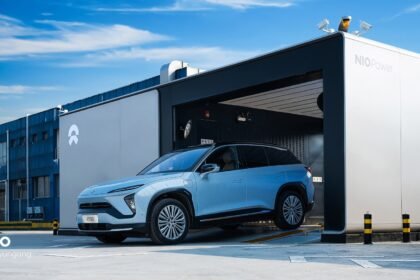
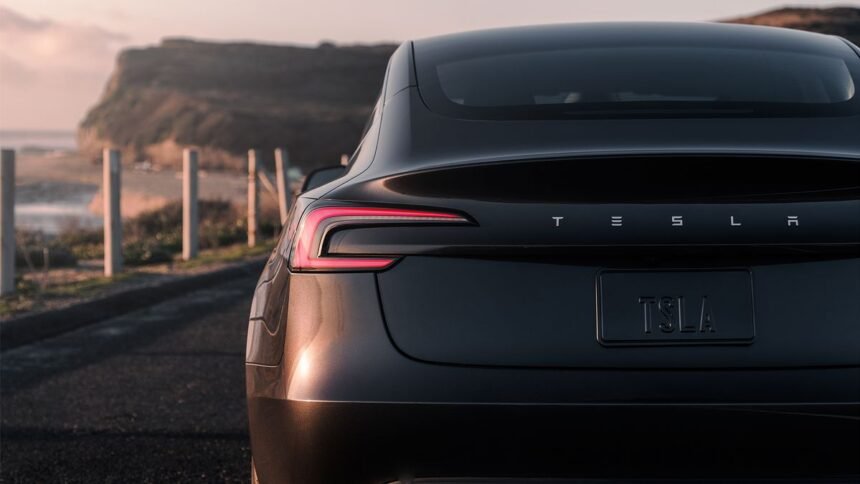
I was skeptical. For years, I dismissed Tesla Electric Cars as an overhyped Silicon Valley experiment, too expensive, too dependent on charging infrastructure, and too unproven for daily life. Then a friend handed me the keys for a weekend. What followed was not just a test drive but a full shift in my perspective on what modern transportation can feel like. Here is an honest account of the five things that transformed me from a doubter into a genuine Tesla electric-car fan through nothing more than lived experience.
1: Instant Torque and the Thrill of Electric Acceleration
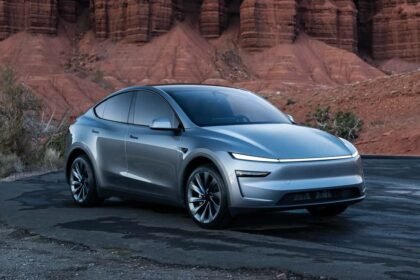
Nothing prepares you for the moment you press the accelerator in a Tesla for the first time. Unlike internal combustion engines, which build power over a rev range, Tesla Electric Cars deliver full torque instantaneously from a standstill. The Model 3 Performance, for instance, rockets from 0 to 60 mph in just over three seconds, a figure that would embarrass many dedicated sports cars costing three times as much.
What struck me was not just raw speed but the quality of that acceleration. It is smooth, linear, and deeply confidence-inspiring. Merging onto a motorway, overtaking a lorry, or pulling away cleanly at a busy junction becomes effortless. After a few hours, going back to a petrol car felt like typing on a typewriter after using a laptop. The driving dynamics of Tesla Electric Cars had fundamentally recalibrated my expectations, and I had not even touched the advanced features yet.
2: Autopilot and the Genuinely Intelligent Driver-Assistance System
The second revelation came on a long motorway journey. Tesla’s Autopilot system, one of the most discussed features in Tesla Electric Cars, is nothing like the basic cruise control I had imagined. Engaging it on an open stretch of road, the car maintained its lane position with precise steering adjustments, matched the speed of surrounding traffic autonomously, and applied smooth braking when a slower vehicle appeared ahead.
What sets Tesla Electric Cars apart in this space is how naturally the system integrates into normal driving. It does not feel like an intrusive computer override; it feels like a calm, attentive co-pilot. The Navigate on Autopilot feature even handled lane changes on command, suggesting the maneuver, waiting for driver confirmation, and executing it cleanly. For long-distance road trips, this feature alone reduced fatigue by an enormous margin. I arrived at my destination genuinely less tired than I expected, a benefit I had never considered when evaluating electric vehicles.
It is worth noting, as covered in depth at zulqarnain.pro, that the responsible use of Autopilot still requires full driver attention. Still, as a tool for reducing cognitive load, it is genuinely impressive.
3: The Supercharger Network: Range Anxiety Solved
Before driving Tesla Electric Cars, range anxiety was my single biggest objection. What if I ran low on charge in a remote area? What if charging took too long? What if third-party chargers were broken or incompatible? These concerns evaporated within my first long trip, thanks to Tesla’s proprietary Supercharger network.
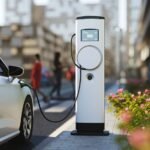
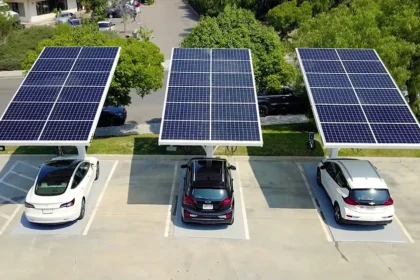
Supercharger stations are strategically placed along major routes, and the in-car navigation system routes you through them automatically based on your destination. More importantly, the charging speed is exceptional. A 15-to-20-minute stop at a V3 Supercharger added over 150 miles of range, enough time to stretch, grab a coffee, and feel genuinely refreshed before continuing. Contrast this with a petrol station stop, and the difference in real-world time is minimal.
Tesla Electric Cars also benefit from preconditioning the battery management system, which automatically warms or cools the battery before you arrive at a Supercharger, ensuring maximum charge acceptance rate. This is a technical detail that most casual observers miss, but that meaningfully impacts the ownership experience. After this trip, I stopped thinking of charging as a limitation and started treating it simply as a different kind of refueling, one I could also do at home overnight for far less cost than petrol.
4: Over-the-Air Software Updates That Genuinely Improve the Car
One morning, I woke up to find that my borrowed Tesla had new features it did not have the night before. A software update arrived overnight silently, wirelessly, automatically, adding an improved regenerative braking setting and a new visualization layer to the Autopilot display. I had not taken it to a dealership. I had not paid for an upgrade. The car had become better while I slept.
This is the most philosophically transformative aspect of Tesla Electric Cars. Traditional vehicles are static objects from the moment they leave the factory. Tesla vehicles are living platforms that evolve continuously. Owners have reported receiving meaningful improvements to range, braking distance, acceleration, and interface responsiveness through routine over-the-air updates, sometimes years after purchase.
For long-term value, this is extraordinary. It directly addresses depreciation concerns, meaning that a two-year-old Tesla Electric Car can, in some respects, be better than the version sold new two years prior. This approach to product development, borrowed directly from consumer software, is a genuine innovation that the traditional automotive industry has been slow to replicate at scale.
5: The Real Cost of Ownership: Far Less Than I Expected
The fifth and perhaps most persuasive factor was the cost of running Tesla Electric Cars compared to what I had assumed. Electricity, even at public chargers, costs significantly less per mile than petrol or diesel. Charging at home overnight on a standard tariff dramatically reduces the per-mile energy cost. But the savings extend well beyond fuel.
Tesla Electric Cars have far fewer moving parts than internal combustion vehicles. There is no engine oil to change, no timing belt to replace, no exhaust system to maintain, no clutch to wear out, and no complex multi-speed gearbox to service. Brake wear is reduced substantially thanks to regenerative braking, which recovers kinetic energy rather than converting it to heat and dust. Tesla’s own service records suggest that total maintenance costs for their vehicles are significantly lower than the industry average for equivalent petrol cars.
When you factor in government incentives available in many markets, lower fuel costs, reduced servicing, and the strong resale value that Tesla Electric cars have historically maintained, the premium purchase price begins to look far more rational. I ran the numbers for my own driving patterns. I discovered that over five years, the total cost of ownership was comparable and, in some scenarios, cheaper than my existing petrol vehicle.
My Personal Opinion About Tesla EVs
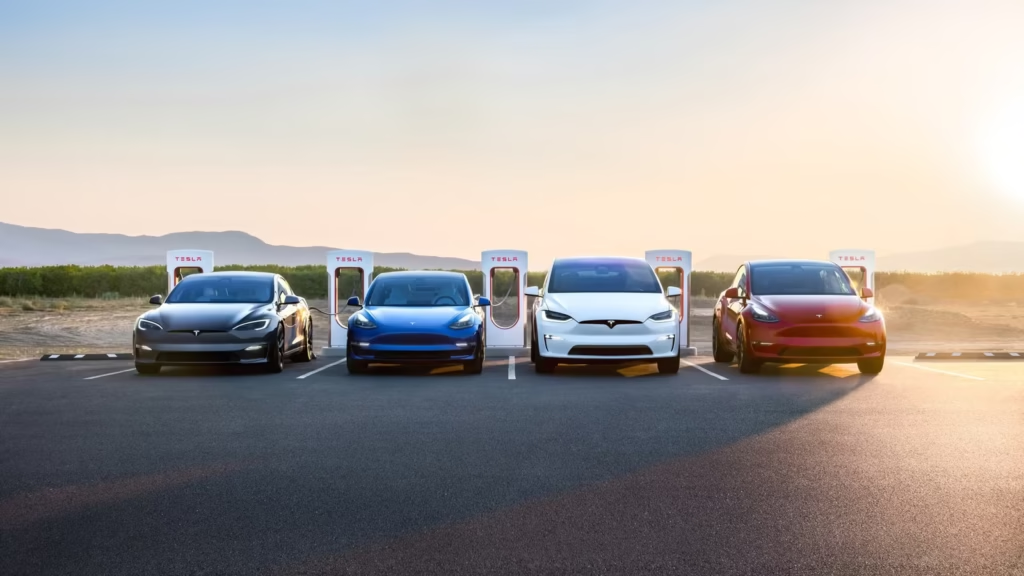
My weekend with a Tesla became a turning point. What I had dismissed as a tech enthusiast’s toy turned out to be one of the most well-engineered, forward-thinking, and genuinely enjoyable Electric Vehicles I have ever driven. Tesla Electric Cars are not perfect, but the charging infrastructure outside major routes still has room to improve, and the minimalist interior takes some getting used to. The sum of the experience is overwhelmingly positive.
The acceleration recalibrates your sense of what a car can feel like. The Autopilot system genuinely reduces long-drive fatigue. The Supercharger network neutralizes range anxiety in practice. The over-the-air updates mean the car improves over time rather than aging. And the true cost of ownership is more competitive than most people realize. If you are on the fence about Tesla Electric Cars, I would recommend borrowing one for a weekend. The experience is convincing in ways that a specification sheet never can be.