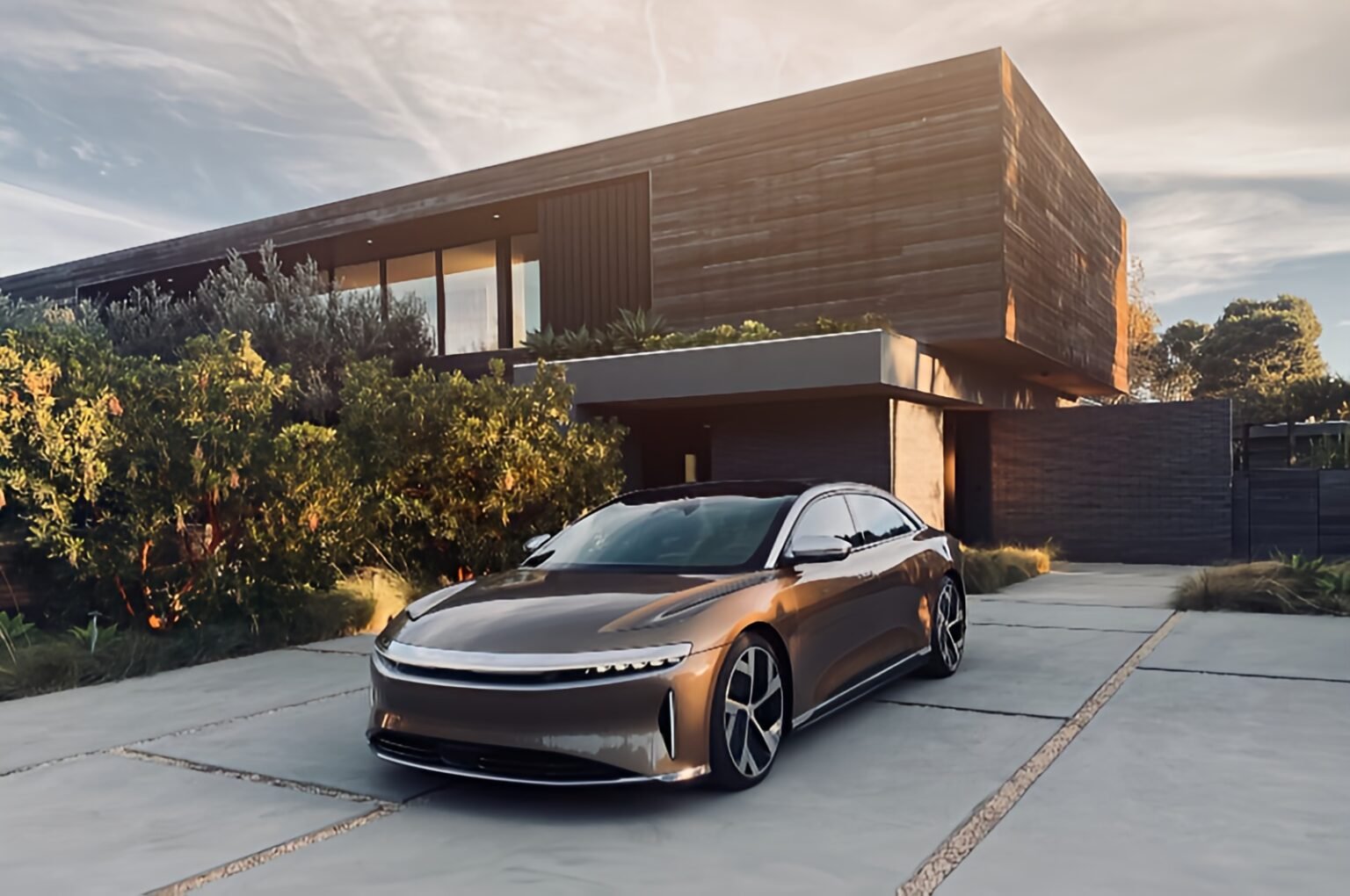

The global electric car market is undergoing one of the most dramatic transformations in the history of personal transportation. Fueled by advances in battery technology, aggressive government policy, and an increasing societal commitment to sustainability, the electric car market has evolved from a niche curiosity into a multi-trillion-dollar economic force reshaping every corner of the automotive industry. For consumers, investors, and policymakers alike, understanding the forces driving this expansion is no longer optional; it is essential.
- The Role of Clean Energy in Powering the Electric Car Market
- Government Policy and Regulatory Frameworks
- Technological Breakthroughs Driving Electric Car Market Growth
- Key Players Shaping the Electric Car Market
- Consumer Adoption: Shifting Mindsets and Buying Behavior
- The Supply Chain: Minerals, Manufacturing, and Sustainability
- Emerging Markets: The Next Frontier for Electric Car Market Expansion
- Frequently Asked Questions
17M+ EVs sold globally in 2023
$1.7T Projected market value by 2030
18% Global new car sales share (EVs)
60+ Countries with EV incentive programs
The Role of Clean Energy in Powering the Electric Car Market
At the heart of the electric car market’s growth is a fundamental shift in how the world generates and consumes energy. Clean energy sources, such as solar, wind, hydroelectric, and nuclear, are becoming increasingly cost-competitive with fossil fuels. As electricity grids grow greener, the environmental case for electric vehicles strengthens enormously. An EV charged on a coal-heavy grid still produces fewer lifetime emissions than a petrol vehicle, and as renewable capacity expands, the advantage becomes overwhelming.
Government commitments under international agreements, such as the Paris Accord, have accelerated this trend. Nations across Europe, Asia, and the Americas have pledged to achieve net-zero carbon targets, and the electrification of transport is central to every credible pathway toward that goal. These political commitments translate directly into funding streams, tax incentives, and regulatory frameworks that actively stimulate the growth of the electric car market.
“Clean energy and electric vehicles are not separate revolutions; they are two sides of the same coin, accelerating each other toward a carbon-neutral future.”
Government Policy and Regulatory Frameworks
No single factor has done more to expand the electric car market than deliberate government action. The United States’ Inflation Reduction Act (IRA) introduced generous tax credits of up to $7,500 for qualifying EV purchases, spurring a domestic manufacturing boom. The European Union’s commitment to ban the sale of new internal combustion engine (ICE) vehicles by 2035 has sent a clear, irreversible signal to automakers: the future belongs to electric.
Similarly, China, the world’s largest automotive market, has implemented purchase subsidies, license plate quotas, and aggressive production targets, making it the undisputed leader in global EV deployment.
Beyond consumer-facing incentives, governments are investing heavily in charging infrastructure. Without a reliable public charging network, consumer confidence in the electric car market cannot fully materialize. Billions are being directed toward fast-charging corridors along major highways, urban charging hubs, and residential installation support schemes. This infrastructure buildout is not just supporting demand; it is creating it.
Technological Breakthroughs Driving Electric Car Market Growth
Battery Technology: The Core Innovation
The single greatest technical barrier to the expansion of the electric car market has always been battery performance relative to cost. Lithium-ion battery prices have plummeted by more than 90% since 2010, making EVs increasingly price-competitive with their ICE counterparts. The industry is now racing toward solid-state batteries, which promise greater energy density, faster charging times, and improved safety over conventional liquid-electrolyte cells. When solid-state batteries reach mass production, expected in the late 2020s, they are anticipated to trigger another step-change in EV adoption, making range anxiety a relic of the past.
Charging Speed and Grid Integration
Ultra-fast DC charging, capable of delivering up to 350 kW, can now replenish a battery from 10% to 80% in under 20 minutes. Vehicle-to-grid (V2G) technology is turning EVs into mobile energy storage assets, enabling them to feed power back into the grid during peak demand. This bidirectional relationship between EVs and clean energy infrastructure is one of the most underappreciated dynamics in the electric car market, with profound implications for grid stability and household energy costs.
Key Players Shaping the Electric Car Market
The competitive landscape of the electric car market is intensely dynamic. Tesla remains the most recognizable brand globally, having pioneered consumer confidence in long-range EVs and built a proprietary Supercharger network that is now opening to other manufacturers. Traditional automakers, including Volkswagen, General Motors, Ford, Hyundai, and Toyota, have committed hundreds of billions of dollars to EV transitions, launching compelling platforms that are rapidly closing the gap with Tesla’s lead.
Chinese manufacturers represent perhaps the most consequential competitive force in the global electric car market. BYD, which overtook Tesla in quarterly EV sales in late 2023, produces vehicles of increasing quality at dramatically lower price points, fueled by vertically integrated battery supply chains. SAIC, NIO, Li Auto, and Xpeng are also scaling aggressively, with growing ambitions in export markets across Southeast Asia, Europe, and beyond. The editorial team at zulqarnain.pro has closely tracked these market shifts, noting that the democratization of EV technology through competitive pricing is the most consequential trend of the decade.
Consumer Adoption: Shifting Mindsets and Buying Behavior
Early adoption of EVs was concentrated among environmentally conscious, tech-savvy, high-income consumers. The electric car market is now broadening its base substantially. Lower vehicle prices, improved range, a growing variety of body styles (from compact hatchbacks to commercial vans and pickup trucks), and rising familiarity with the technology are driving adoption across income levels, geographies, and demographics.
The total cost of ownership argument for EVs, lower fuel costs, reduced maintenance requirements, and fewer moving parts, is compelling consumers who may have initially been indifferent to environmental considerations.
Consumer surveys consistently show that range anxiety, charging infrastructure, and upfront purchase price remain the top barriers to EV adoption. However, each of these concerns is being systematically addressed as the electric car market matures, suggesting that the current growth trajectory will sustain and potentially accelerate over the coming decade.
The Supply Chain: Minerals, Manufacturing, and Sustainability
The expansion of the electric car market is placing enormous pressure on supply chains for critical minerals, particularly lithium, cobalt, nickel, and manganese. The geographic concentration of these resources, lithium in South America’s “Lithium Triangle,” and cobalt in the Democratic Republic of Congo, creates geopolitical vulnerabilities and ethical sourcing challenges that automakers and policymakers are working urgently to address. Battery recycling programs, direct lithium extraction (DLE) technology, and investment in mining capacity in geopolitically stable regions are all part of a multi-pronged response.
Simultaneously, EV manufacturing itself is transitioning toward greater sustainability. Gigafactories powered by 100% renewable energy, water recycling in battery production, and the development of “second-life” applications for used batteries (such as stationary grid storage) are demonstrating that the electric car market can achieve high growth while progressively reducing its environmental footprint.
Emerging Markets: The Next Frontier for Electric Car Market Expansion
While Europe, China, and North America have led the electric car market to date, emerging markets represent the most significant growth opportunity on the horizon. Countries across Southeast Asia, India, Latin America, and Africa are experiencing rapidly rising vehicle ownership rates.
Delivering affordable, reliable EVs tailored to these markets, where road conditions, temperature extremes, and charging infrastructure may differ significantly from developed-world contexts, is the defining commercial challenge of the next decade.
India, with a population of 1.4 billion and a government committed to aggressive EV adoption targets, is emerging as a particularly critical market. Domestic manufacturers like Tata Motors and Mahindra are gaining ground, while global players are adapting their offerings to local price sensitivities. The trajectory of the Indian electric car market could reshape global supply chains and manufacturing geographies in ways comparable to what China’s rise did for the conventional automotive industry.
The electric car market is not merely an automotive story; it is a story about the restructuring of energy systems, geopolitical influence, manufacturing supply chains, and the everyday lives of billions of people. Clean energy is the catalyst, but the transformation is total. The momentum is now self-reinforcing: as EVs become more affordable, adoption accelerates; as adoption accelerates, charging infrastructure expands; as infrastructure expands, range anxiety diminishes; and as range anxiety diminishes, adoption accelerates further. The virtuous cycle is firmly in motion.
Frequently Asked Questions
What is driving the rapid growth of the electric car market?
A combination of forces is propelling the electric car market: falling battery costs (down over 90% since 2010), strong government policy incentives such as purchase subsidies and ICE vehicle bans, expanding public charging infrastructure, growing consumer awareness of total cost of ownership advantages, and the corporate commitments of major automakers who have pledged hundreds of billions toward EV platforms. Clean energy expansion is also critical as grids become greener, and the environmental case for EVs becomes stronger.
How far can current electric vehicles travel on a single charge?
Range varies significantly by vehicle class and price point. Entry-level EVs typically offer 150–250 km (90–155 miles) of range, which is sufficient for the vast majority of daily commutes. Mid-range vehicles commonly achieve 350–500 km (220–310 miles), while premium long-range models from Tesla, Mercedes, and others can exceed 600 km (370 miles) on a single charge. Advances in battery chemistry and aerodynamics continue to push these figures higher every model cycle.
Are electric cars cheaper to own than petrol or diesel vehicles?
In most markets, the total cost of ownership (TCO) of an EV is already lower than that of an equivalent ICE vehicle when fuel and maintenance savings are factored in. EVs have significantly fewer moving parts, require no oil changes, and experience less brake wear due to regenerative braking. Electricity is typically far cheaper per kilometer than petrol or diesel. The main TCO disadvantage remains the higher upfront purchase price, though this gap is narrowing rapidly as production scales and battery costs fall.
What are the biggest challenges facing the electric car market today?
The electric car market faces several significant challenges. Charging infrastructure remains uneven, particularly in rural areas and developing countries. Supply chain constraints around critical minerals (lithium, cobalt, nickel) create cost pressures and geopolitical risks. Grid capacity must expand to handle millions of additional EV charging events. Consumer range anxiety persists, though it is declining. And affordability in lower-income markets remains a barrier, as even the cheapest purpose-built EVs price out many potential buyers in emerging economies.
Which countries are leading the electric car market?
China is the undisputed leader by volume, accounting for roughly 60% of global EV sales, driven by strong government mandates and a highly competitive domestic manufacturing ecosystem led by BYD. Norway leads globally by market share, with EVs accounting for over 90% of new car sales, thanks to generous incentives. The United States is the third-largest market and is growing rapidly following the Inflation Reduction Act. Germany, the UK, and France lead in Europe, while India and Southeast Asia are emerging as the fastest-growing regions.
Will petrol and diesel cars be banned?
A growing number of countries and regions have enacted or proposed bans on the sale of new internal combustion engine vehicles. The European Union has agreed to end the sale of new ICE cars by 2035. The UK, Canada, and several US states have set similar targets. China has a road map to phase out ICE vehicles by 2035. These policies do not retroactively ban existing petrol and diesel vehicles, meaning that ICE cars already on the road will remain legal to drive for many years. Still, the writing is clearly on the wall for new ICE vehicle sales in major markets.
How long does it take to charge an electric vehicle?
Charging time depends on the charger type and vehicle battery size. A standard home Level 2 charger (7–11 kW) typically takes 6–12 hours to fully charge a mid-range EV from empty, perfectly suited to overnight charging. Public DC fast chargers (50–150 kW) can deliver an 80% charge in 30–60 minutes. Ultra-fast chargers (250–350 kW), now available at dedicated highway stations, can charge compatible vehicles to a 10–80% in as little as 15–20 minutes. Most drivers charge primarily at home overnight and rarely need rapid public charging except on long journeys.
Is the electric car market a good investment opportunity?
The electric car market presents substantial long-term investment potential across multiple sectors: EV manufacturers, battery producers, mining companies supplying critical minerals, charging network operators, and software/semiconductor suppliers. However, investment in this space carries meaningful risks, including rapid technological change, intense competitive pressure (particularly from Chinese manufacturers), regulatory uncertainty, and commodity price volatility.
Investors should conduct thorough due diligence and consider diversified exposure across the EV value chain rather than concentrating in any single company or sub-sector. This is general information only and should not be considered financial advice.