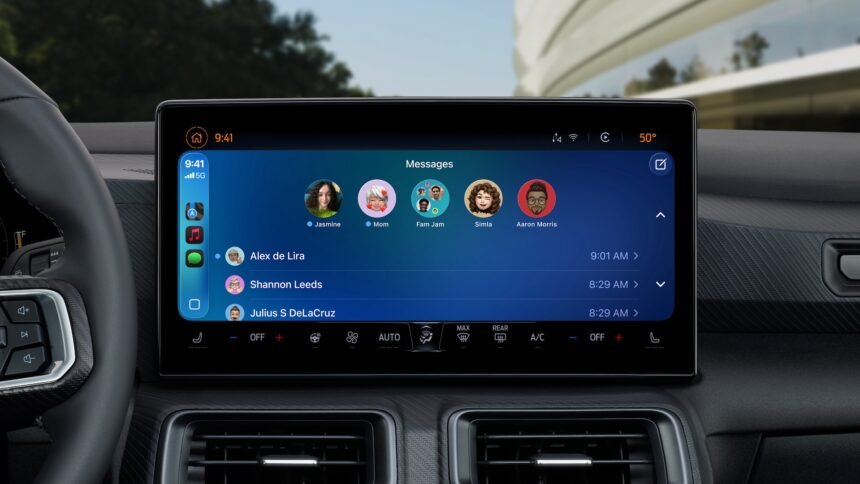
Many car buyers today expect seamless smartphone integration in their vehicles, which is why the absence of Apple CarPlay in Tesla vehicles continues to spark questions among iPhone users. Even in early 2026, Tesla vehicles relied entirely on their own advanced infotainment system rather than allowing drivers to mirror their iPhone screens. This choice surprises some people because Apple CarPlay has become standard in most new cars, offering easy access to maps, music, messages, and apps directly from the dashboard.
Yet Tesla has held firm for years, and recent developments show the feature is coming, but not quite yet. If you own a Tesla or are thinking about buying one, understanding the full picture helps you decide what to expect from your driving experience.
The Growing Demand for Better Phone Integration in Electric Cars
Apple CarPlay first appeared in 2014 and quickly became a favorite because it turns your car’s screen into a safer, bigger version of your iPhone. Drivers love using familiar apps like Apple Maps, Waze, Spotify, or WhatsApp without taking their eyes off the road for long.
For Tesla fans who use iPhones, the lack of this option feels like a missing piece. Many online forums and review sites show owners asking the same question: when will Tesla finally add support? Sales teams at dealerships even report that some potential buyers walk away after learning there is no native Tesla Apple CarPlay. This demand grew stronger as Tesla’s sales slowed in late 2025, pushing the company to rethink its long-standing position.
Tesla’s Long History of Saying No to Apple CarPlay
For more than a decade, Tesla chose to build everything in-house rather than partner with Apple or Google. CEO Elon Musk has openly criticized Apple in the past over App Store rules and other business practices. Tesla believed its own big touchscreen offered a better, more immersive experience than any phone-mirroring system could provide. The company wanted complete control over how the software looks, feels, and works with features like Autopilot and Full Self-Driving (FSD).
Adding Apple CarPlay to Tesla would have meant giving Apple access to the vehicle’s systems, something Tesla avoided to maintain a unique, tightly integrated driving experience. This decision helped Tesla stand out because its interface supports games, a web browser, video streaming, seat heaters, climate controls, and over-the-air updates that improve the car year after year.
Tesla also worried about licensing fees and dependency. Many automakers pay Apple to include CarPlay, but Tesla preferred to invest that money into its own technology. The result? A system praised as one of the best in the industry, with crisp graphics, fast response times, and deep connections to the car’s battery, navigation, and safety features. Owners who switched from other brands often said Tesla’s screen felt more modern and fun than the CarPlay setups in traditional cars.
Why Tesla’s Built-In System Feels Like a Strong Alternative
When you sit in a Tesla, the massive central display serves as the command center for almost everything. You can ask the voice assistant to change the temperature, open the sunroof, or find a Supercharger. Built-in apps handle music from Spotify, Tidal, and even Apple Music, so you don’t need your phone. Navigation uses real-time traffic data and works perfectly with FSD, showing exactly where the car plans to turn or change lanes. Many drivers say this native setup is actually smoother and more reliable than CarPlay, since there are no extra steps or lag.
For daily commutes or long road trips, the Tesla interface already does most of what people want from their phones, plus extras like watching Netflix while charging or playing arcade games. This is one big reason Tesla waited so long before even considering Tesla Apple CarPlay.
The Big Shift in Late 2025: Plans to Finally Add Support
Things started to change in November 2025, when reports revealed that Tesla was quietly testing Apple CarPlay in its vehicles. Softer sales and customer feedback played a major role in this decision. The company realized that some buyers, especially loyal Apple customers, wanted the familiar interface as an option.
The plan was to roll out Tesla Apple CarPlay by the end of 2025, running it in a window alongside Tesla’s own software rather than replacing it completely. This hybrid approach would allow drivers to switch between the two systems easily. It marked a surprising turnaround after years of resistance, showing Tesla’s willingness to listen to the market while protecting its core user experience.
Why Tesla Apple CarPlay Is Still Missing in Early 2026
Even though the company is working hard on it, Tesla Apple CarPlay has not arrived yet. The main hold-up comes from technical challenges discovered during testing. Tesla’s in-house mapping software, which powers Full Self-Driving, did not sync perfectly with Apple Maps. Turn-by-turn directions from both systems could appear simultaneously, potentially confusing drivers in autonomous mode. Tesla asked Apple to fix these compatibility issues, and Apple made the necessary changes in a later iOS 26 update and the newest version of CarPlay.
The bigger problem, however, is the slow adoption of iOS 26. Apple released the update in September 2025, but not enough iPhone users have installed it yet. As of mid-February 2026, only about 74 percent of recent iPhones run iOS 26.
Tesla wants to ensure most customers can use the feature right away, so it is waiting for wider adoption before pushing the software update to cars. Without enough people on the updated iOS version, the Maps fix would not help the majority of drivers. This careful approach prevents frustration and ensures a smooth launch when it finally happens.
What Tesla Owners Can Expect Next
Good news is on the horizon. Tesla continues to work closely with Apple, and many experts believe the feature could arrive with the 2026 Spring software update or shortly after. When it lands, Tesla Apple CarPlay will appear in a dedicated window on the big screen, letting you keep Tesla’s native controls for climate, seats, and FSD visible at the same time.
You will still enjoy full access to Apple apps without losing any of Tesla’s unique strengths. This balanced integration should satisfy both longtime Tesla fans and new buyers who prefer the iPhone experience.
Helpful Alternatives While You Wait for Native Support
If you cannot wait for the official Tesla Apple CarPlay, a few workarounds exist, though none are perfect. Some owners use Bluetooth to stream music and podcasts, or rely on the built-in browser for quick web access. Voice commands through Tesla’s assistant handle most phone-related tasks safely.
A small number of aftermarket solutions claim to add CarPlay-like features, but these are not officially supported and may affect warranty or software updates. The safest bet is to enjoy what Tesla already offers; it really is one of the most advanced systems on the road today.
The Future of In-Car Tech
Tesla’s decision to delay but eventually add support shows how the company balances innovation with customer wishes. For years, the focus remained on building the best possible native experience, which created loyal fans worldwide.
Now, with Tesla Apple CarPlay on the way (even if a bit later than hoped), the brand is opening the door wider without giving up control. If you are shopping for a new Tesla in 2026, rest assured that the wait will not be forever. The combination of Tesla’s powerful hardware and Apple’s familiar interface could make future drives even more enjoyable.
For the latest Tesla software updates, buying guides, and honest reviews, be sure to visit zulqarnain.pro, your go-to source for clear, helpful automotive information that keeps you ahead of the curve.
In the end, whether you love Tesla’s original system or cannot wait for Tesla Apple CarPlay, one thing is clear: electric cars are getting smarter every month. Staying informed helps you enjoy the ride no matter which features arrive first.