
Article Highlights
- Tesla Cybertruck First AC Vehicle becomes California’s first residential AC-based vehicle-to-grid (V2G) asset approved by PG&E.
- Cybertruck owners can send power back to the grid through PG&E’s Vehicle-to-Everything (V2X) pilot program.
- Up to $4,500 in incentives available for installation and equipment costs.
- Tesla’s AC-based PowerShare system eliminates the need for costly DC bidirectional chargers.
- Competing systems from Ford and GM rely on expensive DC infrastructure costing $6,000–$10,000.
- Cybertruck supports home backup power and grid energy export during peak demand.
- Participation is optional and user-controlled, with customizable energy discharge limits.
- The Cybertruck’s 123 kWh battery is equivalent to about 9 Powerwalls, offering massive storage capacity.
- Helps stabilize California’s grid during high-demand periods, especially summer evenings.
- Builds on Tesla’s earlier Texas V2G rollout, expanding into a much larger EV market.
- Potential to significantly grow Tesla’s virtual power plant network in California.
- Marks a major step toward affordable, scalable V2G adoption for residential users.
A New Era for Energy and Mobility
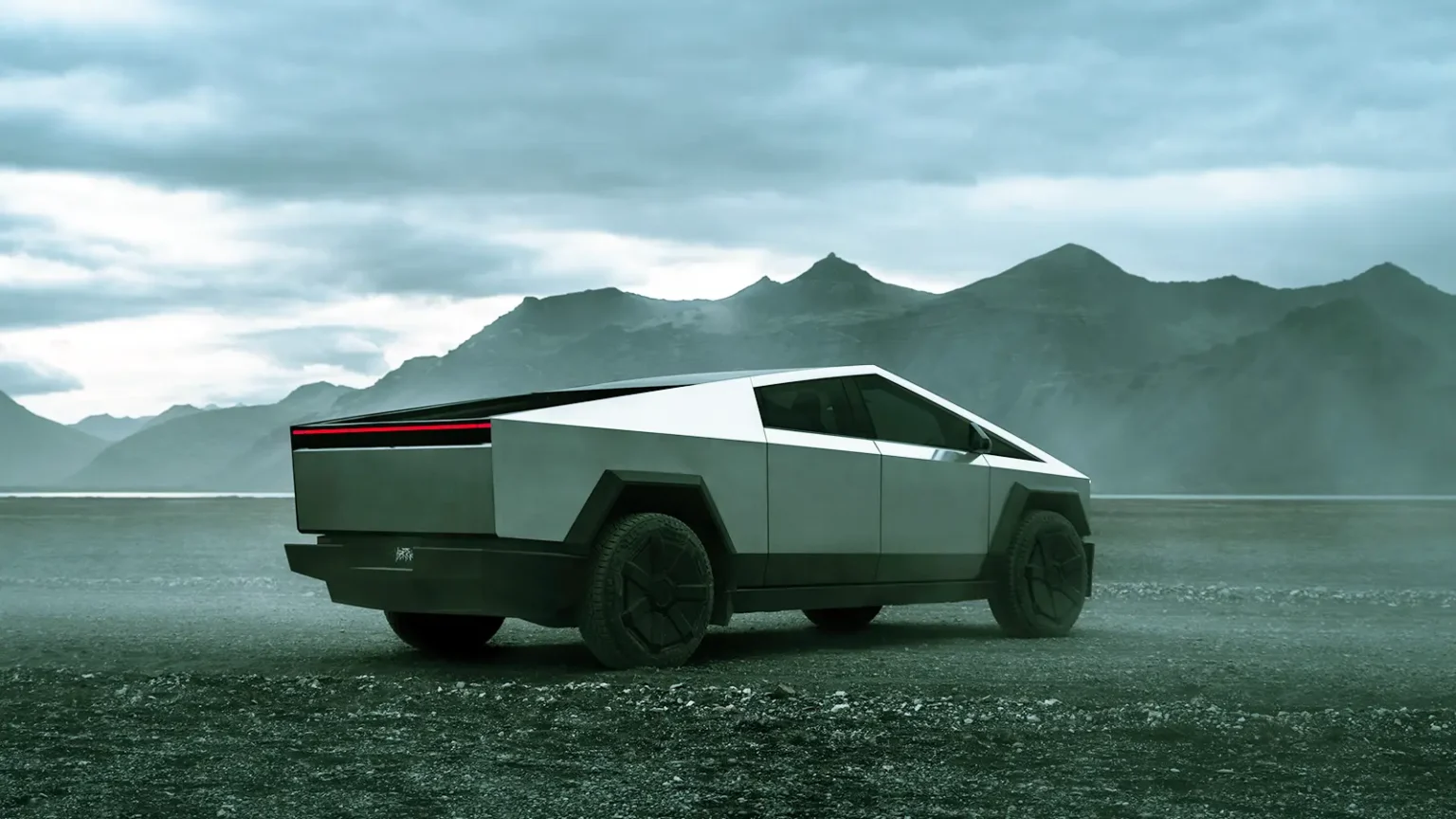
The Tesla Cybertruck First AC Vehicle milestone represents a significant shift in how electric vehicles interact with the power grid. In a groundbreaking development, Pacific Gas and Electric (PG&E) has approved the Tesla Cybertruck to supply electricity back to California’s grid through its residential Vehicle-to-Everything (V2X) pilot program. This approval not only highlights Tesla’s innovation but also signals a broader transformation in how Utility vehicles can contribute to energy resilience and sustainability.
- Article Highlights
- A New Era for Energy and Mobility
- What Makes the Tesla Cybertruck First AC Vehicle Unique
- Comparing Tesla’s AC Approach with Ford and GM
- How the PG&E V2X Program Works
- Battery Capacity and Grid Impact
- Expansion from Texas to California
- The Future of Vehicle-to-Grid Technology
- Industry Perspective and Insights
- A Transformational Step Forward
With incentives of up to $4,500 available for equipment and installation, this initiative is designed to make participation more accessible to homeowners while advancing grid reliability during peak demand periods.
What Makes the Tesla Cybertruck First AC Vehicle Unique
The standout feature of the Tesla Cybertruck First AC Vehicle is its AC-based vehicle-to-grid system. This marks the first time California has approved such a system for residential use. Unlike traditional DC-based solutions, Tesla’s AC approach simplifies the process of integrating electric vehicles into home energy systems.
Tesla’s PowerShare system operates using standard residential electrical infrastructure. By using a Powershare Gateway and a Universal Wall Connector, the Cybertruck eliminates the need for expensive, complex DC bidirectional chargers. This innovation reduces both installation costs and technical barriers, making vehicle-to-grid participation more practical for everyday homeowners.
Comparing Tesla’s AC Approach with Ford and GM
PG&E’s V2X pilot program has previously included vehicles like the Ford F-150 Lightning and General Motors’ Ultium-based lineup, including the Chevrolet Silverado EV and Cadillac Lyriq. However, these vehicles rely on DC bidirectional charging systems.
DC systems typically require specialized hardware costing between $6,000 and $10,000, along with dedicated circuits and potential electrical panel upgrades. In contrast, the Tesla Cybertruck First AC Vehicle leverages existing home electrical systems, significantly lowering costs and simplifying installation.
This distinction is critical for scaling vehicle-to-grid technology. By eliminating the need for expensive infrastructure, Tesla’s AC-based system opens the door to wider adoption in residential markets.
How the PG&E V2X Program Works
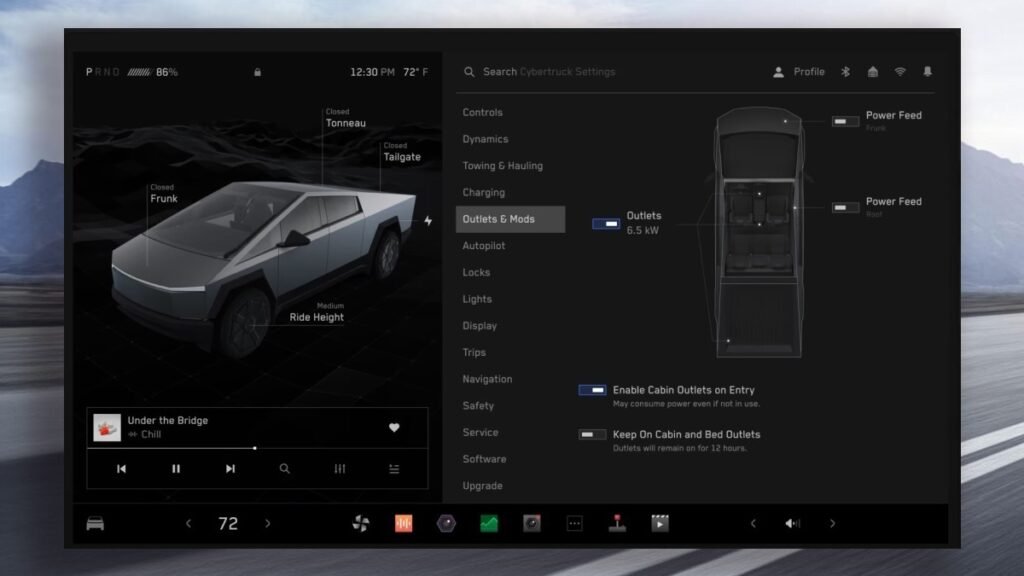
Under PG&E’s V2X pilot program, Cybertruck owners within the utility’s service area, covering more than 16 million people, can enroll to activate two key features:
- Powershare Home Backup: Allows the Cybertruck to power a home during outages.
- Powershare Grid Support: Enables the vehicle to send electricity back to the grid during high-demand periods.
Participation is entirely optional, giving users full control over their energy usage. Owners can decide when to contribute power and set limits to ensure sufficient battery capacity for driving needs.
Financial incentives play a major role in encouraging adoption. In addition to the initial $4,500 support for setup costs, participants can earn compensation for contributing energy during grid events and receive bonuses for remaining enrolled throughout the pilot program.
Battery Capacity and Grid Impact
The Tesla Cybertruck First AC Vehicle is equipped with a powerful 123 kWh battery pack, equivalent to roughly nine Tesla Powerwalls. This substantial capacity makes it one of the most capable mobile energy storage solutions available today.
Such capacity becomes particularly valuable during California’s peak demand periods, typically on summer evenings when solar energy production decreases while electricity use, especially from air conditioning, surges. By feeding energy back into the grid, Cybertruck owners can help stabilize supply and prevent outages.
Expansion from Texas to California
This California approval follows Tesla’s earlier launch of its Powershare Grid Support program in Texas in early 2026. In that program, Cybertruck owners began earning bill credits by supplying energy during high-demand events.
However, California represents a far larger opportunity. The state has the largest electric vehicle market in the United States, and PG&E serves more EV drivers than any other utility. Tesla’s existing virtual power plant operations in California have already demonstrated success, delivering over 100 MW of energy during peak events and generating millions in payouts for participants.
Adding the Tesla Cybertruck, the first AC Vehicle to this ecosystem, significantly enhances its potential. With each Cybertruck offering nearly nine times the storage capacity of a single Powerwall, the cumulative impact could be transformative.
The Future of Vehicle-to-Grid Technology
The introduction of the Tesla Cybertruck, the first AC vehicle, underscores a critical evolution in vehicle-to-grid technology. Historically, high costs and complex installations have limited widespread adoption. Tesla’s AC-based solution addresses both challenges, making participation more feasible for average homeowners.
Currently, the Cybertruck is the only Tesla model equipped with the Powershare feature. However, Tesla has indicated that future models may include bidirectional charging capabilities. If implemented across its entire vehicle lineup, Tesla’s virtual power plant could expand dramatically.
Industry Perspective and Insights
Energy and automotive experts view this development as a turning point. The ability for electric vehicles to serve as both transportation and energy assets introduces a new level of flexibility in managing electricity demand.
The AC versus DC debate is central to this progress. While DC systems paved the way for early adoption, their cost and complexity limited scalability. Tesla’s AC approach could redefine industry standards, enabling faster and broader integration of vehicle-to-grid systems.
A Transformational Step Forward
The Tesla Cybertruck First AC Vehicle milestone represents more than just a technical achievement; it signals a shift toward a more decentralized and resilient energy system. By enabling homeowners to participate in grid management, Tesla and PG&E are actively setting the stage for a future in which electric vehicles play a critical role in energy distribution.
As adoption grows and technology evolves, the Cybertruck’s success could pave the way for millions of vehicles to become integral components of the power grid. For now, this initiative serves as a powerful proof of concept, demonstrating how innovation can bridge the gap between transportation and energy infrastructure.