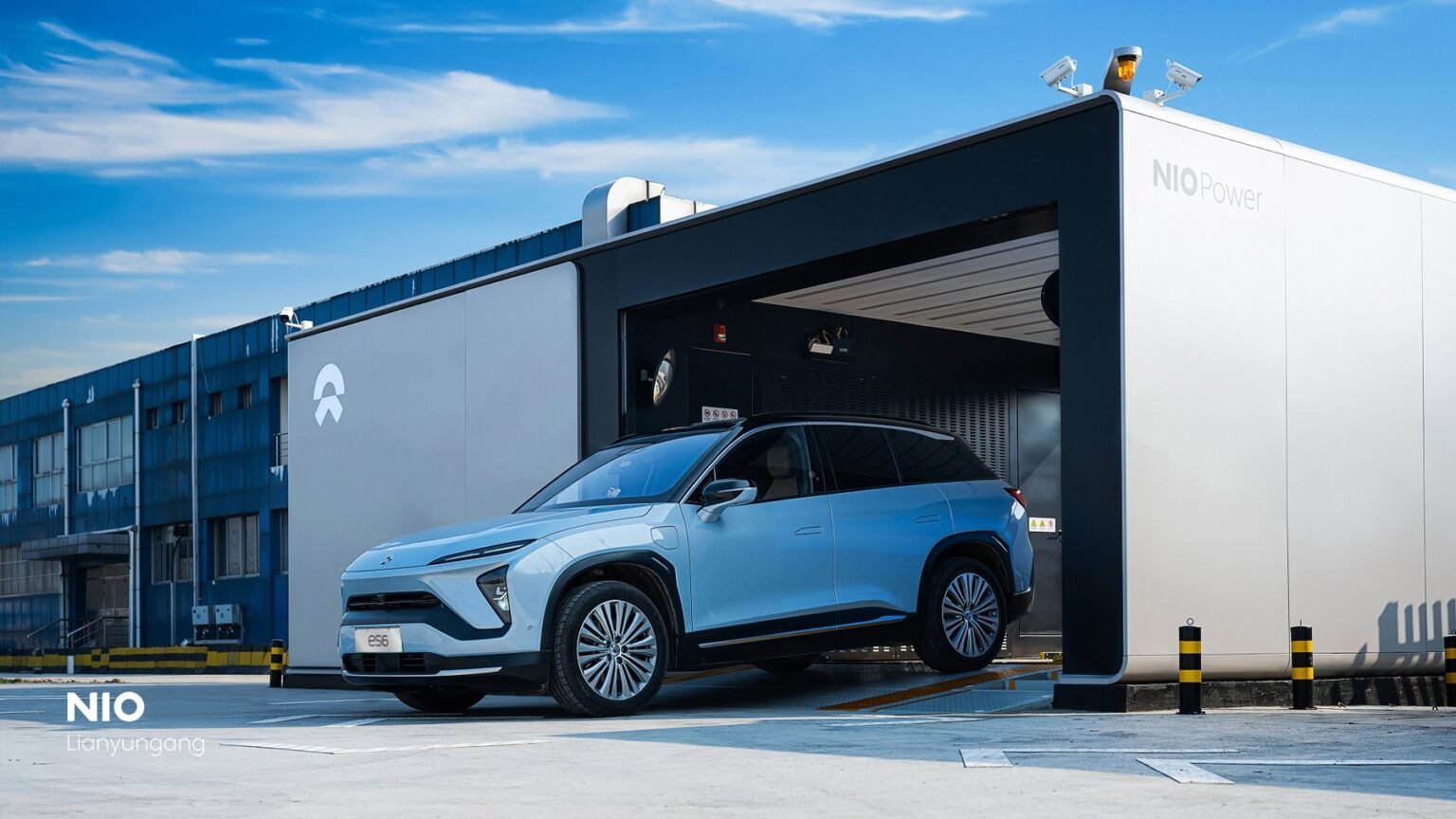

Nio, the popular Chinese electric vehicle maker, has once again shown the world how smart battery technology can solve everyday problems for drivers. On February 19, 2026, during the busy Chinese Lunar New Year holiday, Nio battery swaps reached an amazing new high. Customers completed exactly 165,898 battery swaps in just 24 hours. That is about 2 full swaps per second across the whole network. This record proves that Nio battery swaps are not just a fancy idea; they work perfectly even when millions of people are on the road at the same time.
- Nio Battery Swaps Reach Record 165,898 in One Day
- Nio Battery Swaps Set New Single-Day Record at 165,898
- Nio Battery Swaps Surge to 165,898 in 24 Hours
- Nio Battery Swaps Break Daily Record with 165,898 Swaps
- Nio Battery Swaps Achieve Historic 165,898 in a Day
This milestone came during one of the busiest travel periods in China. Families were heading home or returning from holiday visits, and many chose Nio cars for their quick, simple refueling. Before this day, Nio had already broken its own record twice in the same week, once with 146,649 swaps on February 15 and again with 158,290 on February 18. The latest figure of 165,898 shows how well the system handles high demand without slowing down.
Many people still worry about electric cars because charging can take a long time, especially on long trips. But Nio battery swaps change that completely. Instead of waiting 30 minutes or more at a fast charger, drivers can drive into a station and get a fresh battery in 3 to 5 minutes. They do not even have to get out of the car. The whole process feels as easy as filling up a gas tank, but it is cleaner, quieter, and better for the planet.
So how exactly do Nio battery swaps work? It is an automated system that uses clever robotics. When you arrive at a Power Swap Station, you reserve the swap through your car’s navigation screen. The vehicle backs in, lifts a little, and robotic arms quickly remove the empty battery from underneath. They slide in a fully charged one from the station’s storage.
The old battery is sent to a charging slot inside the station, where it is prepared for the next driver. Newer stations can handle this in as little as 144 seconds for some models. Best of all, you stay safe and dry inside your car the whole time, no cables, no weather issues, and no waiting around.
Nio battery swaps offer many clear advantages over normal charging. First, the time saved is huge. A quick stop adds hundreds of kilometers of range instantly. Second, you never have to worry about finding a charger with the right power or dealing with broken plugs. Third, Nio offers a Battery as a Service (BaaS) plan, where you can subscribe to a battery instead of buying one with the car.
This makes the car cheaper to buy upfront and lets you upgrade to a bigger battery later if you want more range. Many drivers say this makes long road trips feel just like driving a gasoline car.
The network behind these Nio battery swaps is growing fast and strong. As of early 2026, Nio operated 3,750 battery swap stations across China. More than 1,022 of them sit along busy expressways, connecting 550 cities and making highway travel smooth and stress-free. The busiest station on the record day handled 173 swaps at the Xiaoxi Service Area in Fujian province.
Other top spots along major highways did 159 swaps each. These stations work 24 hours a day and can store up to 23 batteries at once in the latest versions. Nio plans to add another 1,000 stations in 2026 and roll out even better fifth-generation designs starting soon.
Nio battery swaps also bring big benefits for the environment and your wallet. By February 6, 2026, the company had already completed its 100 millionth swap overall. Those 100 million swaps delivered 5.28 billion kilowatt-hours of electricity. They saved drivers more than 83 million hours compared to regular charging and cut energy costs by over 26 billion Chinese yuan versus gasoline. That is roughly 27,000 yuan in savings per user, on average.
On the green side, the swaps helped avoid thousands of tons of carbon emissions, the equivalent of what 167,000 trees absorb in a year. The stations also help the power grid by charging batteries at night when electricity is cheaper and cleaner.
Compared to traditional EV charging, Nio battery swaps win in almost every way for busy drivers. Fast DC chargers are getting better, but they still take 20 to 40 minutes for a good top-up, and you have to stand outside or sit in your car while the battery heats up. With Nio battery swaps, the car is ready to go again almost immediately. No range anxiety on long trips. No fighting for charger spots during holidays.
Older or disabled drivers love it because there are no heavy cables to handle. Families with kids appreciate the speed so they can keep moving instead of wasting time at stations.
This record also shows how Nio battery swaps help the whole electric vehicle industry move forward. While many countries focus solely on installing more plug-in chargers, China is proving that swapping can handle real-world rush-hour traffic perfectly. Nio cars now feel practical for everyday people who drive far distances.
Other companies are watching closely, and some are even thinking about similar systems. In the future, we might see Nio battery swaps open to more brands, making the technology even more useful.
Looking ahead, Nio battery swaps have bright days coming. The company wants to expand its “Power Journeys” routes to 100 different paths across China and even along the old Silk Road. Newer stations will be faster and hold more batteries. Sub-brands like Firefly will soon let more drivers enjoy swaps too.
As more people buy Nio cars, the network will get even busier and more efficient. This could finally solve one of the biggest barriers to buying an electric vehicle, the fear of running out of power far from home.
In short, the 165,898 Nio battery swaps in a single day are more than just a number. It is proof that smart technology can make electric driving easier, cheaper, and more enjoyable for everyone. Whether you are planning a short city trip or a long holiday drive, Nio battery swaps remove the usual headaches of owning an EV.
If you want to learn more about this exciting technology or other new developments in electric cars, visit zulqarnain.pro for regularly updated articles, tips, and honest reviews.
Nio battery swaps are showing the world a better way to power the future of driving. With records like this, it is clear that swapping is here to stay and only getting better. If you have not tried a Nio car yet, this record might be the perfect reason to consider one for your next vehicle. The age of quick, worry-free electric travel has truly arrived.
Three Key Points of “Nio Battery Swaps”
1: Record-breaking single-day achievement during peak travel
On February 19, 2026 (the third day of the Chinese Lunar New Year holiday), Nio customers completed an all-time high of 165,898 battery swaps in just 24 hours. This equates to roughly two swaps every second across the entire network. This milestone marked the third time in five days that Nio broke its own daily record (previously 146,649 on February 15 and 158,290 on February 18), driven by massive holiday travel demand in China.
2: Impressive network scale and busiest stations
Nio operates over 3,750 battery swap stations nationwide (with more than 1,000 along major expressways), connecting hundreds of cities. The busiest individual station on the record day handled 173 swaps at the Xiaoxi Service Area on the G1523 Ningbo-Dongguan Expressway in Fujian province. Two other highway stations each reached 159 swaps, showing how well the system handles extreme usage during peak periods without major delays.
3: Proven advantages of battery swapping technology
Nio battery swaps allow drivers to get a fully charged battery in 3–5 minutes (sometimes as fast as ~144 seconds for newer models) while staying inside the car—no cables or long waits like traditional charging. The system supports the Battery as a Service (BaaS) model, reduces range anxiety for long trips, saves time and money (over 26 billion yuan saved vs. gasoline in past swaps), cuts emissions, and helps balance the power grid. By early 2026, Nio had already passed 100 million cumulative swaps, proving the technology’s real-world scalability and reliability at massive volumes.
These points highlight why Nio’s approach is gaining attention as a practical solution for making electric vehicles more convenient, especially during high-demand travel seasons. For more details on EV innovations like this, check out zulqarnain.pro.